

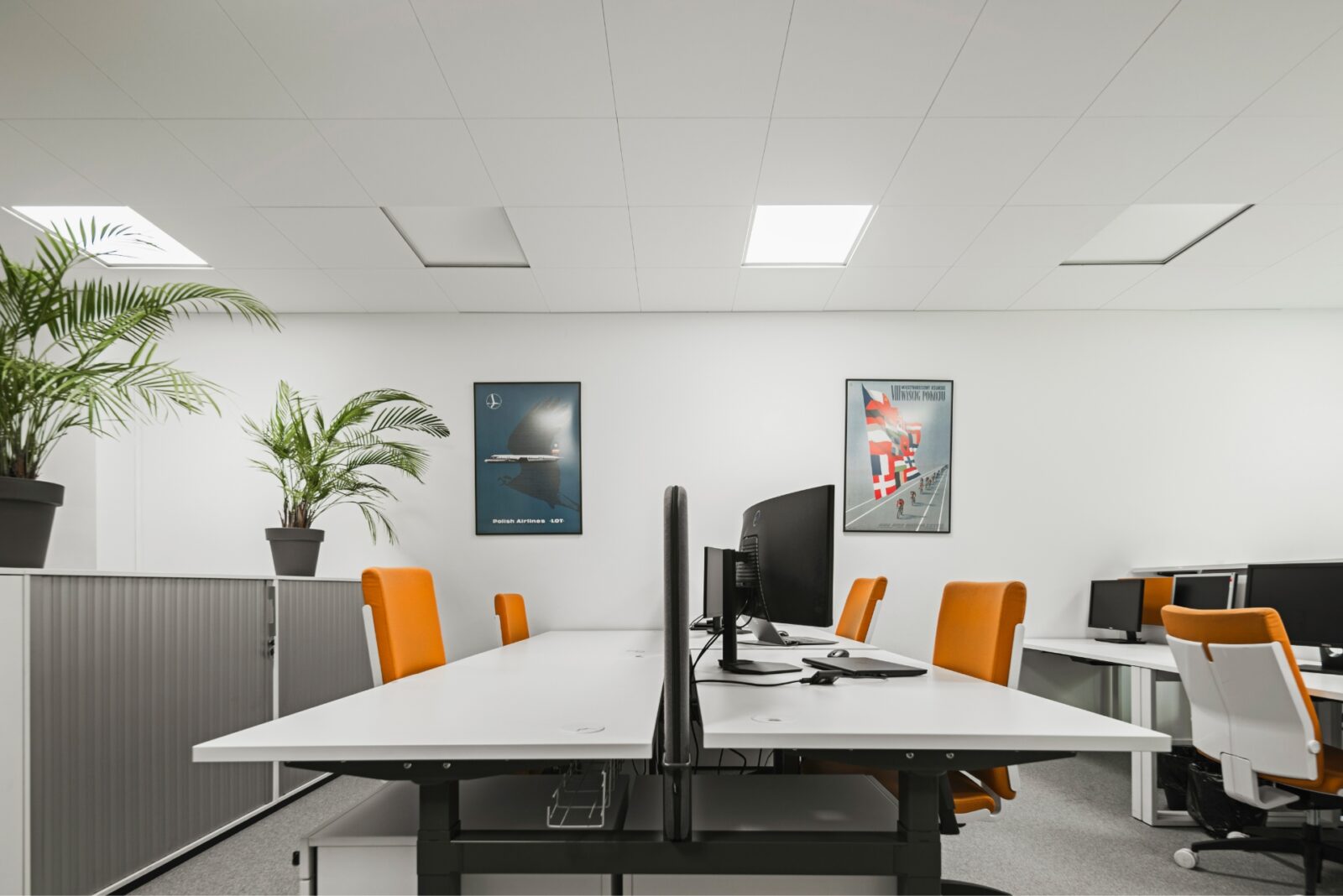
The Warsaw office market has matured significantly. Companies setting up or relocating here face a recurring question at the planning stage: manage design and construction separately, or hand everything to one partner? The answer, increasingly, is the latter. The design and build model – where a single contractor owns both the architectural concept and its physical execution – has become the preferred approach for tenants and property owners navigating complex commercial fit-outs in the Polish capital.
What Design and Build Actually Means
In a traditional delivery model, a client commissions a designer, then runs a separate tender to find a contractor. Two contracts, two parties, and the client stuck in the middle absorbing cost overruns when design assumptions clash with construction reality. Design and build consolidates both functions under one roof – the firm that designs the space is also the one that builds it.
This creates a fundamentally different dynamic. Instead of a design being handed over a wall to a constructor who wasn’t involved in making it, both disciplines work in parallel from the start. Technical constraints inform design decisions early. Material choices are made with real cost and availability data. The timeline is owned by one team, not negotiated between two.
For office fit-out projects specifically – where the scope typically includes partition walls, suspended ceilings, flooring, electrical and IT infrastructure, lighting, and furniture – this integration makes a significant practical difference from day one.
Why It Works Particularly Well in Warsaw
Warsaw’s commercial real estate market has some specific characteristics that make design and build especially well suited to the local context.
The pace of the market is one factor. Companies expanding or relocating in Warsaw rarely have the luxury of a stretched project timeline. Lease agreements come with move-in dates attached, and a design and build contractor can begin detailed technical work while architectural concepts are still being refined – compressing the overall programme in ways that sequential contracts simply cannot.
The diversity of the building stock is another. Warsaw’s offices range from post-communist-era blocks to brand-new Class A towers, with everything in between. Each building type presents different technical constraints – slab heights, structural grids, existing MEP systems. A contractor involved from day one understands these constraints intimately and produces far fewer expensive surprises at the construction stage.
Finally, the regulatory environment. Polish fit-out projects require specific approvals and health and safety sign-offs at multiple stages. An experienced local design and build partner navigates this without causing delays, which in a market where time is directly tied to lease cost, matters considerably.
The Commercial Case for Single-Point Accountability
Beyond the operational logic, there is a clear financial argument for design and build. Single-point accountability eliminates the contractual grey areas where cost overruns tend to hide. When one party is responsible for both design and construction, there is no one to pass the blame to when a detail proves more expensive to build than anticipated – and experienced firms price their offers knowing this.
For tenants negotiating with landlords over tenant improvement allowances, having a reliable cost estimate early in the process – something a design and build contractor can provide based on real build experience rather than theoretical quantities – is a significant advantage at the negotiation table. Risk allocation is also cleaner: the client takes on less technical exposure, because the contractor carries responsibility for delivering a finished, functional space rather than just a set of drawings.
What the Full Scope Covers
A comprehensive design and build engagement for an office project in Warsaw typically spans several overlapping phases:
- Space planning – establishing how the floor plate is divided between workstations, meeting rooms, focus spaces, informal zones, and back-of-house functions
- Concept and interior design – developing the visual language, specifying materials, finishes, lighting, and acoustic treatments
- Technical design – architecture and all MEP disciplines, translated into buildable drawings that account for the specific building’s constraints
- Execution – demolition of existing fit-out where needed, partition construction, ceilings, flooring, all mechanical and electrical work, furniture installation
- Project management and handover – coordination of trades, programme and budget control, regulatory approvals, and final commissioning
The key distinction from traditional delivery is that these phases overlap rather than follow each other sequentially. That overlap is precisely where the model delivers its value – and where less experienced contractors tend to lose time and budget.
Choosing the Right Partner
Not every firm offering design and build services in Warsaw has the depth of experience the model requires. The integration only delivers its full value when the design team genuinely understands construction and the construction team genuinely engages with design intent – which takes years of working together and a shared culture of problem-solving.
References matter more than credentials here. A firm with a long track record of completed office projects for recognisable tenants – and those tenants willing to vouch for the experience – is a more reliable signal of capability than any certification. For companies navigating a fit-out in Warsaw for the first time, engaging a design and build partner before the lease is even signed allows technical input to inform space selection, not just space execution. That early involvement can save significant time and money before a single wall is touched.